
Case study
HP Flare KO Drum Inspected Without Operational Disruption
A traditionally high-risk, shutdown-driven inspection was completed efficiently while maintaining safe and stable operations.
Key Outcomes
- Completed inspection without disrupting operations
- Avoided complex shutdown and isolation scope
- Reduced safety exposure on a high-risk asset
- Delivered reliable integrity data for decision-making
Project Overview
The Challenge
Flare KO drums present significant inspection challenges due to:
- Critical role in plant safety systems
- Complex geometry and internal configurations
- Limited access and harsh service conditions
Conventional inspection would have required shutdown, extensive isolation, and high-risk execution activities, with significant operational impact.
The Solution
Planning
- Assessment of degradation mechanisms specific to flare service
- Identification of critical inspection zones
- Development of a practical, risk-based inspection approach
Execution
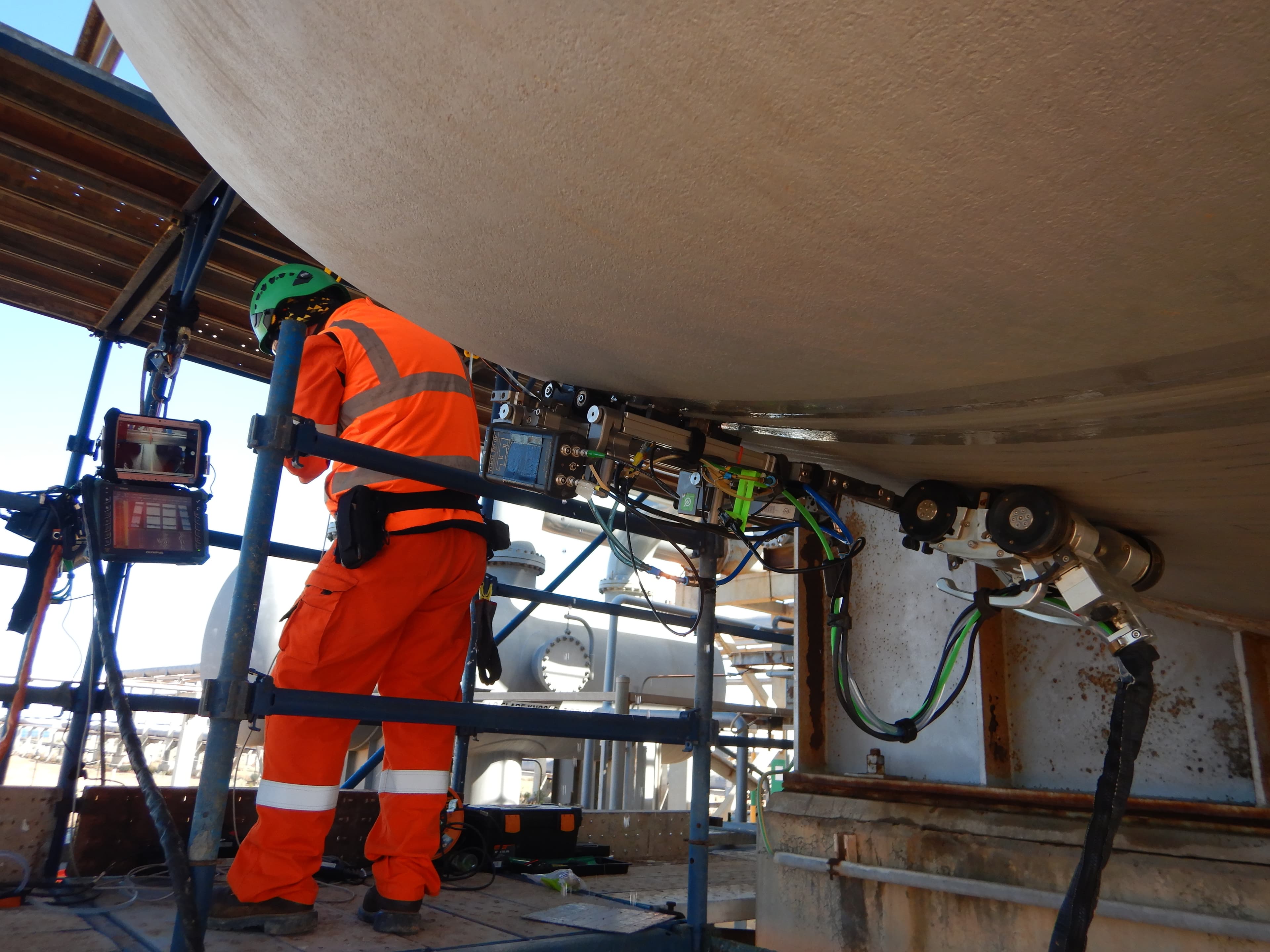
- External inspection using advanced NDT techniques
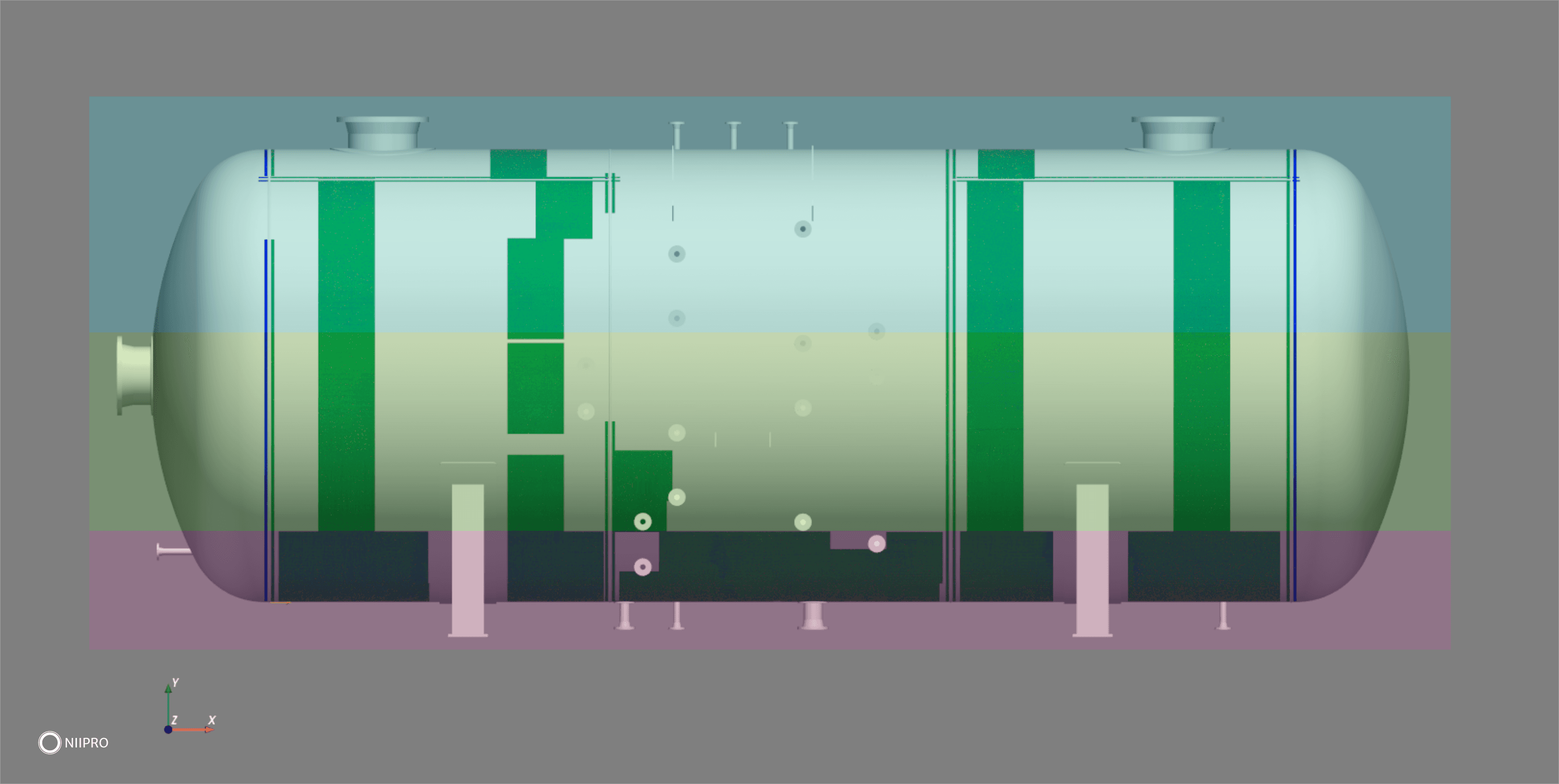
- Targeted coverage of high-risk and difficult-to-access areas
- Efficient field execution with minimal operational impact
Close-Out
- Data validation and engineering assessment
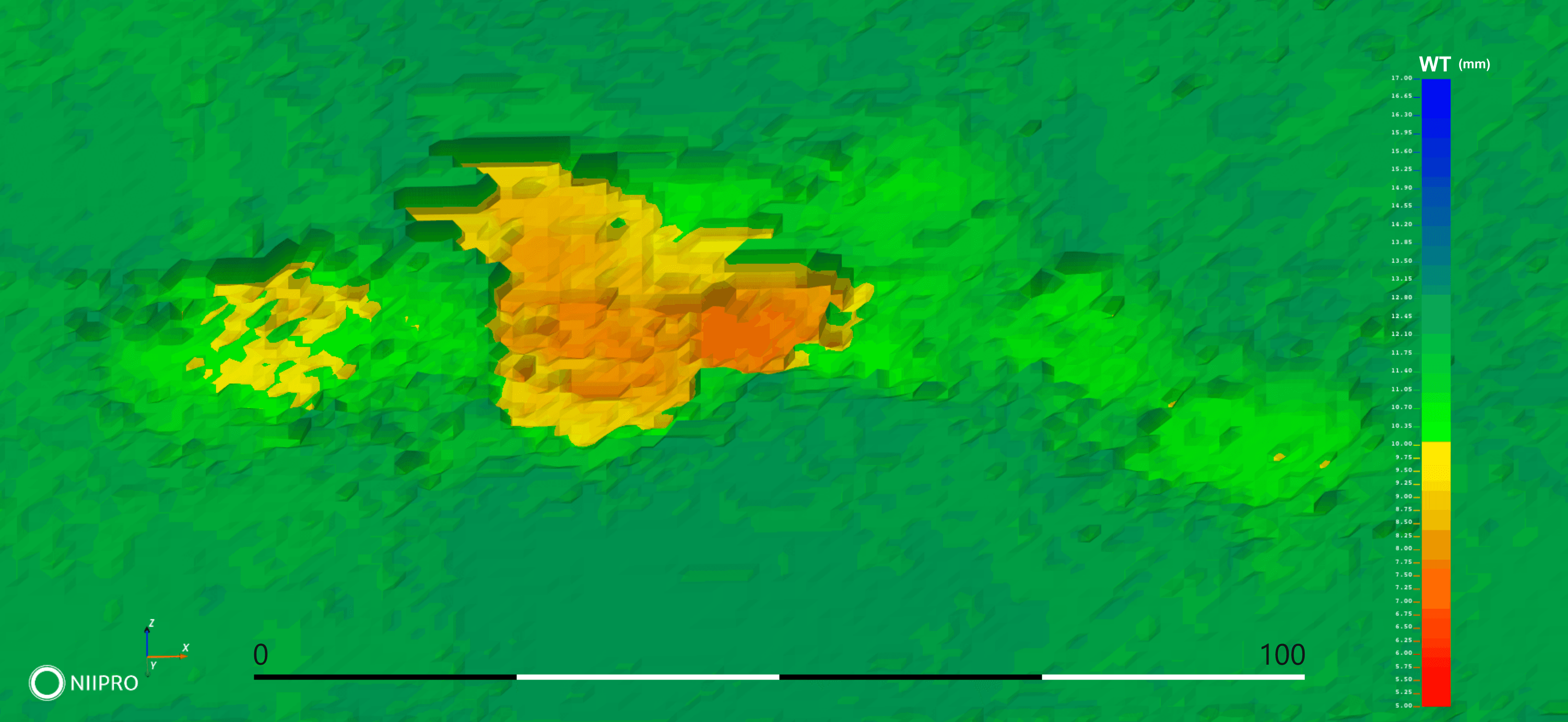
- Identification and evaluation of degradation
- Integration into integrity management planning
Technical Detail
- Inspection strategy aligned to service conditions and damage mechanisms
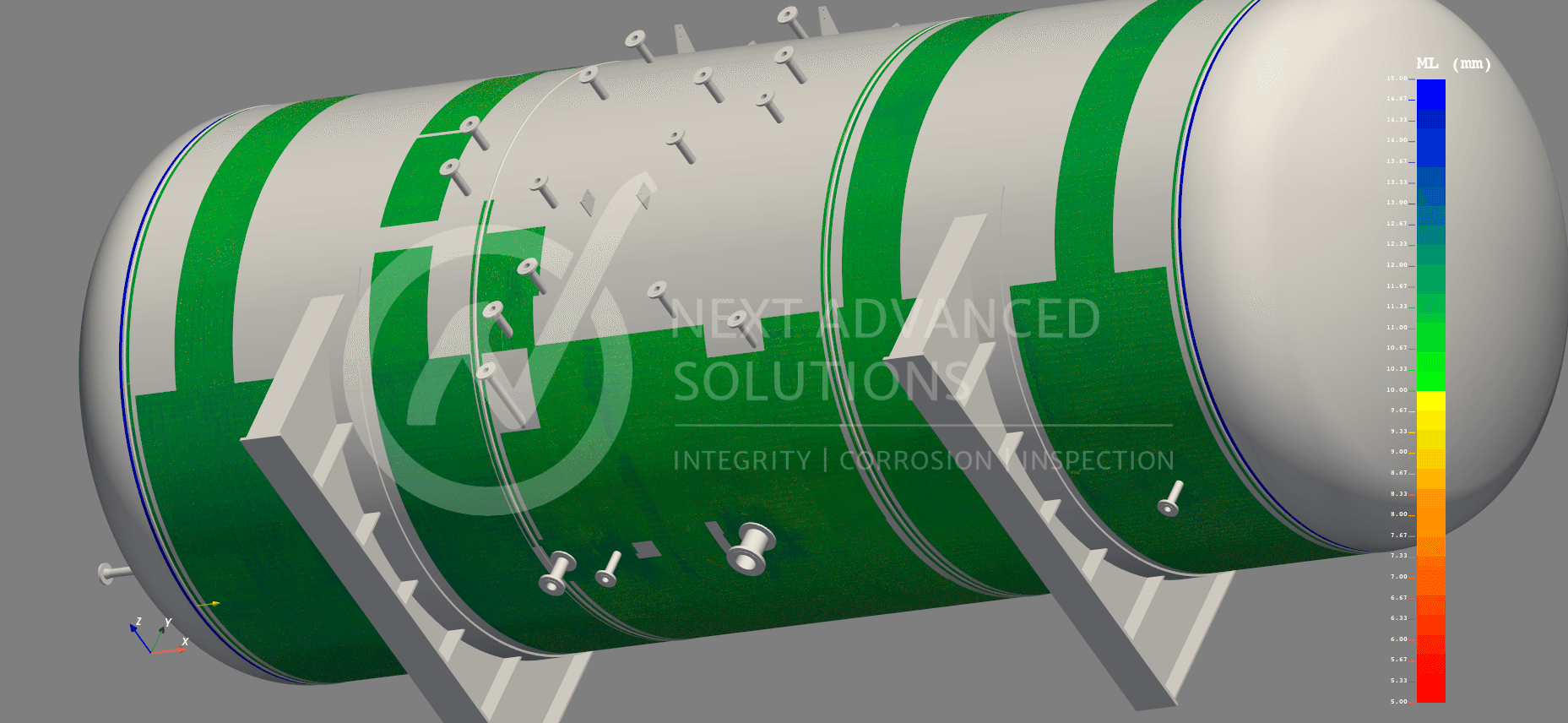
- Targeted inspection of corrosion-prone and accumulation areas
- High-quality data capture in challenging locations
- Assessment of localised degradation features
- Outputs structured for future monitoring and inspection planning
Outcome & Impact
The inspection was completed safely and efficiently, avoiding the need for a complex and disruptive shutdown.
- Operational impact minimised
- Safety exposure reduced
- Reliable data obtained
- Future inspection strategy improved
Key Takeaways
- Complex assets can be inspected effectively without shutdown
- Targeted strategies reduce execution risk
- NII enables safer inspection of high-risk systems
- Planning is critical for difficult inspection scopes