

Technical overview
This is how NII decisions are actually made.
How Non-Intrusive Inspection Works
A structured, engineering-led process to assess vessel integrity without shutdown or internal entry.
Non-Intrusive Inspection is not a single test. It runs from information and screening through strategy and planning, physical on-site execution, data analysis, and engineering evaluation to a clear integrity outcome.
Field execution and evaluation are core to the process, not an afterthought.
Step-by-step NII workflow
For an individual asset, NII follows a formal sequence from information through screening, strategy, and planning, then physical on-site execution, evaluation, and decision. The steps below mirror that vessel-level logic. Screening does not automatically exclude difficult cases; field work and analysis are one program.
Asset screening · Services · NII overview
Front-end engineering

Step 1Information gathering
Why it mattersInspection planning is only credible when degradation risks are understood in engineering terms.
Step 1Information gathering
Inspection planning is only credible when degradation risks are understood in engineering terms.
What happens
- Collect vessel design data, materials, operating conditions, process history, RBI and corrosion-risk inputs, inspection history, and known anomalies.
- Review damage mechanisms, likely morphologies, and where degradation is expected to concentrate.
Step 2Equipment profile and screening
Why it mattersNot every vessel is a straightforward NII candidate. Screening defines a controlled starting point and an auditable record.
Step 2Equipment profile and screening
Not every vessel is a straightforward NII candidate. Screening defines a controlled starting point and an auditable record.
What happens
- Build a structured equipment profile.
- Assess whether the vessel is intrinsically suitable for NII: geometry, materials, access, internal furniture, temperature, prior history, and practical feasibility.
Step 3High-level decision
Why it mattersThis step determines whether the inspection approach is credible before time and cost are committed to planning and field work. Limited history does not automatically exclude NII; it changes what must be justified.
Step 3High-level decision
This step determines whether the inspection approach is credible before time and cost are committed to planning and field work. Limited history does not automatically exclude NII; it changes what must be justified.
What happens
- Evaluate confidence in degradation knowledge, previous inspection effectiveness, and the severity and rate of degradation.
- Decide whether NII is appropriate in principle, or whether scope must be modified or supplemented.
Step 4Vessel zoning
Why it mattersDamage is rarely uniform. Zoning makes inspection targeted, efficient, and defensible.
Step 4Vessel zoning
Damage is rarely uniform. Zoning makes inspection targeted, efficient, and defensible.
What happens
- Divide the vessel into zones with similar condition, exposure, geometry, and degradation threats.
- Apply inspection logic by zone instead of treating the whole surface as uniform.
Step 5Inspection strategy selection
Why it mattersStrategy sets the logic for coverage, method selection, and performance requirements.
Step 5Inspection strategy selection
Strategy sets the logic for coverage, method selection, and performance requirements.
What happens
- Choose how each zone will be inspected. The choice depends on degradation likelihood, predictability, rate and severity, and whether damage is expected to be distributed or localised.
Strategy types
Type A: validate absence of degradation
Demonstrate that expected damage is not present to the limits of the method and coverage.
Type B: sample for zone estimates
Obtain a sufficient sample to support statistical or engineering estimates for the zone.
Type C: find the worst case in the zone
Target identification of the most severe degradation in the zone when local extremes drive the decision.
Step 6Inspection planning
Why it mattersPlanning controls execution quality, data usefulness, and the ability to repeat the program later.
Step 6Inspection planning
Planning controls execution quality, data usefulness, and the ability to repeat the program later.
What happens
- Define coverage requirements and inspection tasks: methods, techniques, and locations.
- Set performance requirements such as probability of detection and measurement accuracy.
- Prepare work instructions and workpack detail, including technical setup for long-term repeatability.
On-site inspection execution

Step 7On-site inspection execution and data capture
Why it mattersField execution drives most of the cost and sets the ceiling on how much confidence analysis can deliver afterward.
Step 7On-site inspection execution and data capture
Field execution drives most of the cost and sets the ceiling on how much confidence analysis can deliver afterward.
What happens
- Physical on-site inspection execution against the workpack: advanced NDT data capture at the volumes and locations the plan requires.
- Manage deviations, site constraints, and non-conformances in the field; position and organise data for analysis and audit.
Close-out engineering
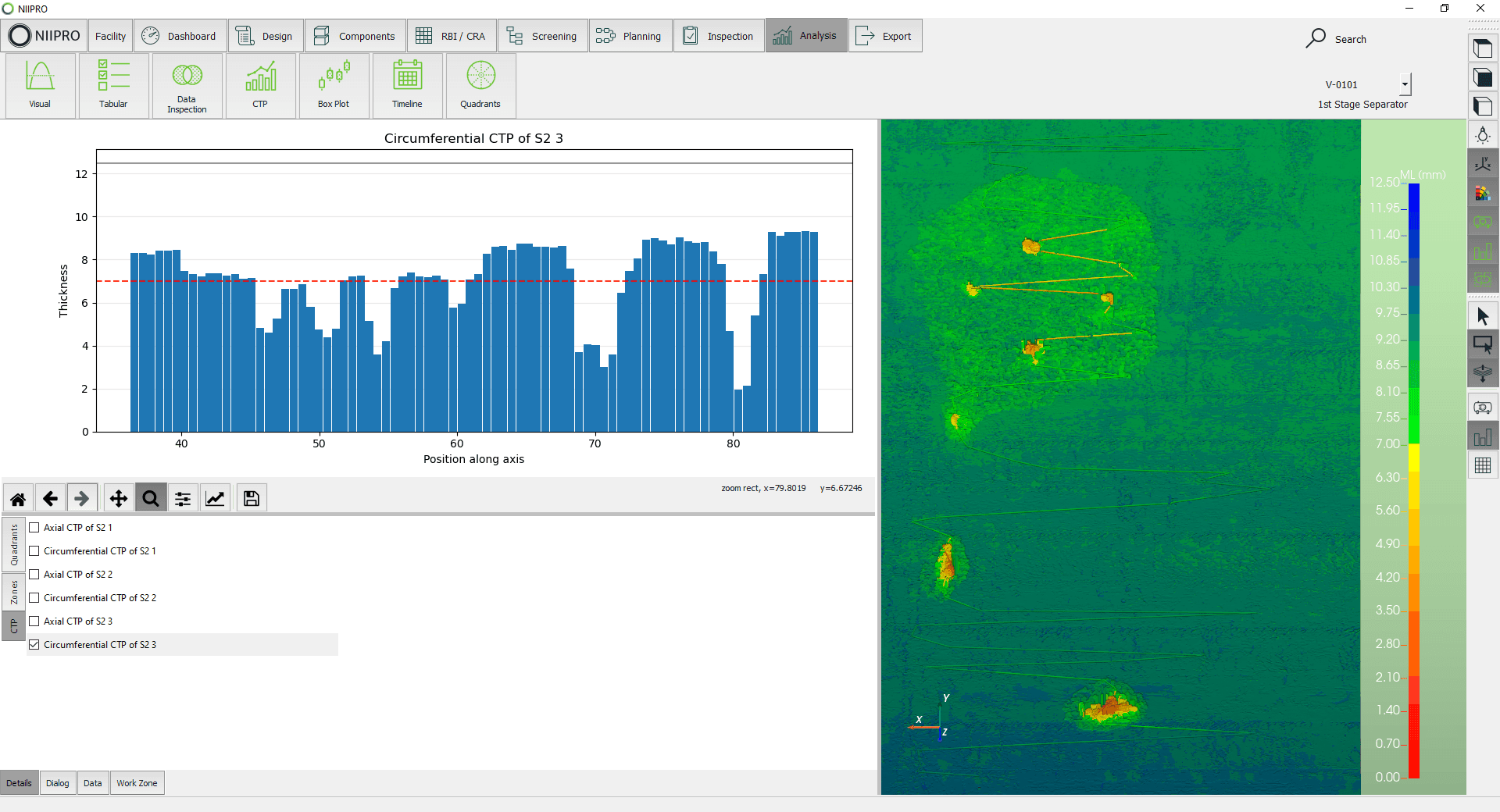
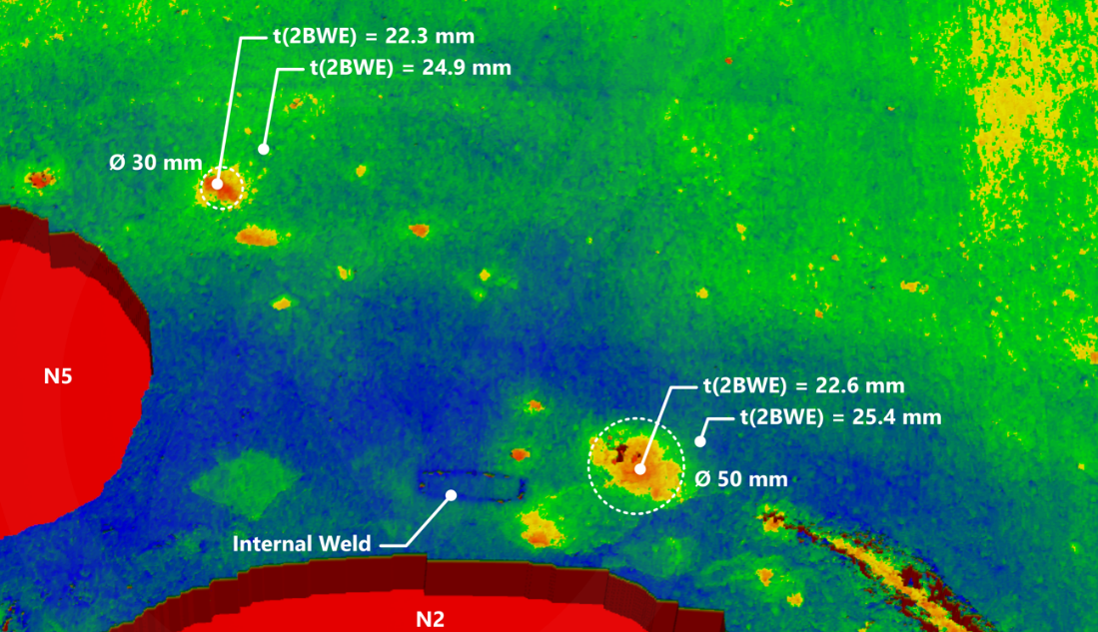
Step 8Evaluation, analysis, and decision
Why it mattersNII is not complete when the scan finishes. It is complete when results are evaluated and translated into an integrity decision.
Step 8Evaluation, analysis, and decision
NII is not complete when the scan finishes. It is complete when results are evaluated and translated into an integrity decision.
What happens
- Evaluate conformance to the inspection plan; analyse data and identified degradation.
- Apply statistical and engineering evaluation where required; assess fitness for service.
- Update intervals, findings, and integrity systems including RBI and IMS links where applicable.
NII is a multi-disciplinary process
Non-Intrusive Inspection works best when engineering, inspection, and operational knowledge are connected. The process depends on more than inspection technique. It depends on understanding the asset, the service conditions, the degradation mechanisms, the limitations of the method, and the implications of the results. Contributing disciplines include integrity engineering, corrosion engineering, inspection specialists, NDT expertise, operations knowledge, and data analysis.
- Integrity
- Corrosion
- Inspection
- NDT
- Operations
- Data
Why the process matters
The outcomes below are what structured methodology is designed to deliver when planning, execution, and evaluation are done properly. They are not guarantees for every asset.
Reduced shutdown scope
Where the process supports it, operators can narrow internal work to what integrity evidence actually requires.
Less reliance on confined space entry
External evidence is gathered deliberately so internal entry is not the default answer.
Structured decision-making
Clear stages and records replace ad hoc NDT with traceable logic from inputs to conclusion.
Clearer view of degradation
Zoning and strategy align measurements with how damage is expected to behave.
Quantitative data for trending
Digital capture and analysis support future intervals and comparison to prior campaigns.
Stronger RBI / IMS updates
Outputs can feed interval review and risk models when the close-out is engineered properly.
Better targeting of follow-up work
The next inspection or maintenance scope reflects what the evidence showed, not habit alone.
How NAS delivers the NII process
NAS runs the full NII workflow from front-end assessment through inspection planning, on-site execution, data evaluation, and close-out. That includes the technical structure needed to make NII repeatable, auditable, and useful for long-term integrity management.
- Front-end engineering, equipment profiling, and NII screening
- Strategy selection, zoning, and inspection planning with workpacks
- Physical on-site inspection execution and advanced NDT delivery
- Conformance review, data analysis, and integrity evaluation
- Engineering close-out, intervals, and integration with integrity systems
- Structured workflows and NIIPRO data control where they strengthen traceability
NIIPRO is the structured workflow and data layer NAS uses for planning, field records, traceability, and evaluation alongside physical inspection delivery. NASLAB supports testing and validation where methods need evidence under controlled conditions.
Related: NII overview · Screening · Services · Case studies · Contact
Common questions
- What is included in inspection execution?
- On-site work against an agreed workpack: advanced NDT data capture, handling of site constraints and non-conformances, and records that support later analysis and audit.
- Does the process end after field work?
- No. Evaluation, conformance to the plan, integrity assessment, interval review, and IMS updates are part of the same program. Field work without evaluation does not complete NII.
- Does NAS run the full process?
- NAS delivers front-end engineering through on-site execution, data evaluation, and close-out, using repeatable workflows and tools such as NIIPRO where they add traceability.
- How does screening relate to this workflow?
- Screening and qualification sit early in the chain. They inform whether and how to proceed into strategy, planning, and execution. They are not a substitute for those steps.
Need a structured NII approach for your assets?
NAS delivers the full workflow: planning, on-site inspection execution, analysis, and close-out, so operators get repeatable, auditable programs and clearer integrity decisions.